


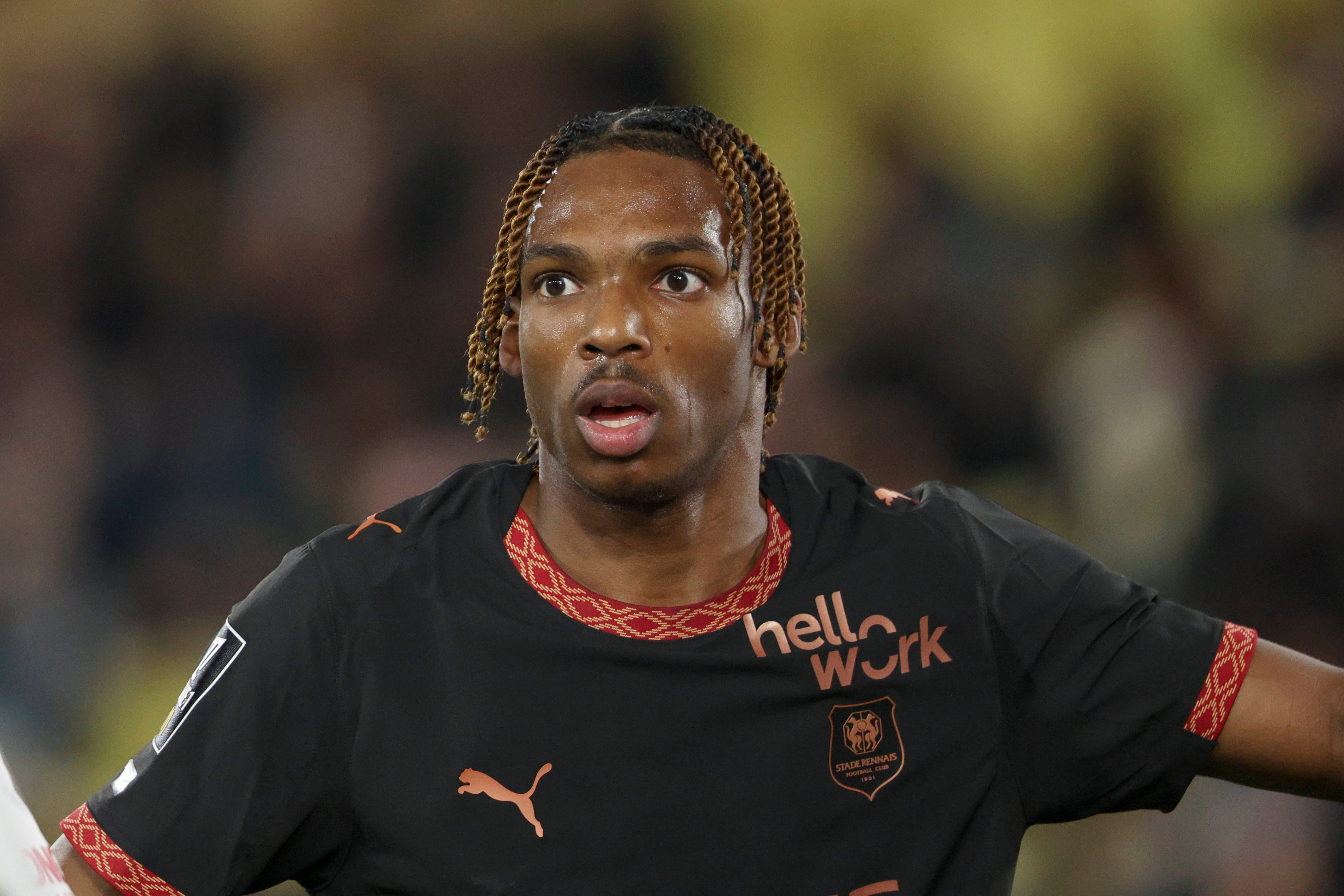
Only a few years ago, Liverpool’s model for signing players was rigid enough that rumours of interest in Jeremy Jacquet would have been easy to quickly dismiss.
The Frenchman was too young, too inexperienced to be a £60m target for a club that preferred to pursue players who had amassed far more than the 2,700 Ligue 1 minutes he has managed thus far in his short career.
The recruitment staff’s thinking went that the larger the sample size, the better picture of the player the scouts and data analysts were able to paint, making it easier to avoid the mistakes so many others made.
Yet Liverpool have seemingly completely abandoned that policy in not only signing Jacquet, but paying such a large fee to do so.
So, what is behind this sudden shift to what, on the surface, seems like a far riskier strategy?
Liverpool sources insist it owes much to a changing transfer market in which rival clubs are harnessing data to uncover the best prospects more quickly than ever.
The result is that it is hard to imagine anyone making a signing like Sadio Mane or Mohamed Salah now, with both players arriving at Anfield on the cusp of their peaks for what proved to be bargain fees.
Liverpool have instead been forced to move earlier for the biggest talents, and compete with Europe’s biggest clubs in the process.
And things does not always fall in their favour, with Manchester United flexing their financial muscle to snag Leny Yoro two summers ago before the pull of Real Madrid proved too much for Dean Huijsen in the last one.
However, the Reds have finally won a similar race in landing Jacquet, who informed a disappointed Chelsea that he had his heart set on Anfield over the weekend.
Now - and quite unlike with many of their big signings under Jurgen Klopp - Liverpool have plenty of work to do to ensure the defender proves worth the money, though this is a habit that their recent business has encouraged.
Although the talent of their signings is undeniable, there haven’t been many finished products added across two transfer windows in which their additions’ average age is lower than 22.
Of course, the upside of this approach is that the squad is starting to look futureproof, despite stalwarts such as Salah, Virgil van Dijk and Andy Robertson nearing the end of their time on Merseyside.
But it is understood that this has also been matched by an acceptance among senior figures that a younger group will need time to develop, and that consistent levels of high performance might be difficult to achieve in the short term as a result.
